Every so often, a cigar shows up at the shop that makes people squint. It’s green. Not “green-ish.” Not “unripe.” Green like money, green like a pool table, green like something that fell out of a Christmas stocking. That’s a candela — and if you’re under fifty, there’s a decent chance you’ve never smoked one. Here’s the twist: for most of the twentieth century, neither sentence would have made sense, because the candela wasn’t a novelty. It was the American cigar.
What Makes a Candela a Candela
The green is not dye, gimmick, or an accident. It’s chemistry. Every wrapper leaf starts out green, full of chlorophyll. Most cigars get their brown through months of slow fermentation — the leaf essentially sweats itself dark under carefully managed heat. A candela skips the spa entirely: the leaf is flash-cured over direct heat in a matter of days, which locks the chlorophyll in place and keeps the wrapper its natural green. Less time in fermentation also means the candela keeps a milder, grassier, sweeter character — less of the toasted, developed depth that browning creates.
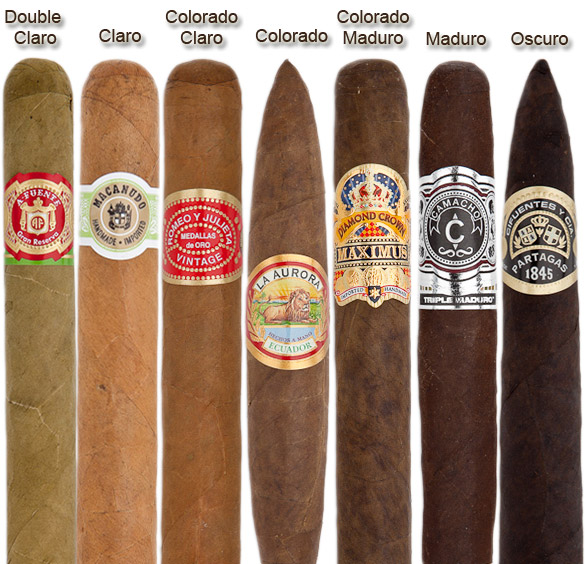
You’ll see it under several names: Candela (“candle,” for the flame-drying), Double Claro (the lightest rung of the wrapper-color ladder), and our favorite, American Market Selection — the old catalog term for green wrappers, back when “green” and “American cigar” were the same sentence.
The Green Century
Walk into an American cigar shop in, say, 1958, and the humidors glowed green. Candelas were the hot cigars in America — the most popular wrapper in the country for most of the twentieth century, right up through the 1970s. Cuban growers had perfected the art of turning out whole barns of green wrapper decades earlier, and American factories followed. John F. Kennedy — a man who famously signed the Cuban embargo with a stash of H. Upmanns already secured — smoked them. The green leaf ruled the counter that your grandfather bellied up to.
Why did it dominate? Practical reasons, mostly. Fast curing meant fast, cheap production — no months of fermentation, no expensive real estate tied up in aging rooms. The flavor was mild and approachable, which suited the mass American palate. And the pale green wrapper photographed nicely on a brand’s bands and boxes. It was, in the most literal sense, the everyman’s cigar.
The Fall
Then, in the late 1970s, the market changed its mind. Tastes shifted toward darker, more complex wrappers — golden Connecticut Shade, russet Corojo, near-black Maduro — and the new premium aesthetic equated darkness with quality. A slow tanning process reads as “craft” the way a long-fermented wine reads as serious. The candela’s greatest strength — speed — became its image problem. Green became the color of drugstore machine-made smokes, the cigar your uncle bit the end off of. By the 1990s, when the cigar boom remade premium retail, the candela had been quietly relegated to the novelty bin and the bargain shelf. Nothing about the leaf had changed. Everything about the story had.
The Slow Green Comeback
Here’s where it gets interesting: over the last fifteen years, a handful of boutique and heritage makers have been rolling candelas on purpose — not as nostalgia, but as a legitimate flavor profile. The pitch is simple: green is a taste, not a defect. Cured right, a candela wrapper delivers fresh-cut grass, sweet hay, cream, white pepper, and a herbal brightness that no brown leaf can imitate. It also happens to be the most Instagram-friendly wrapper on the shelf, which the marketing departments have absolutely noticed. The candela is still niche — nobody’s mistaking it for the next Maduro — but the craft cigar world has stopped apologizing for it.
A few worth your money, from the classic to the confrontational:
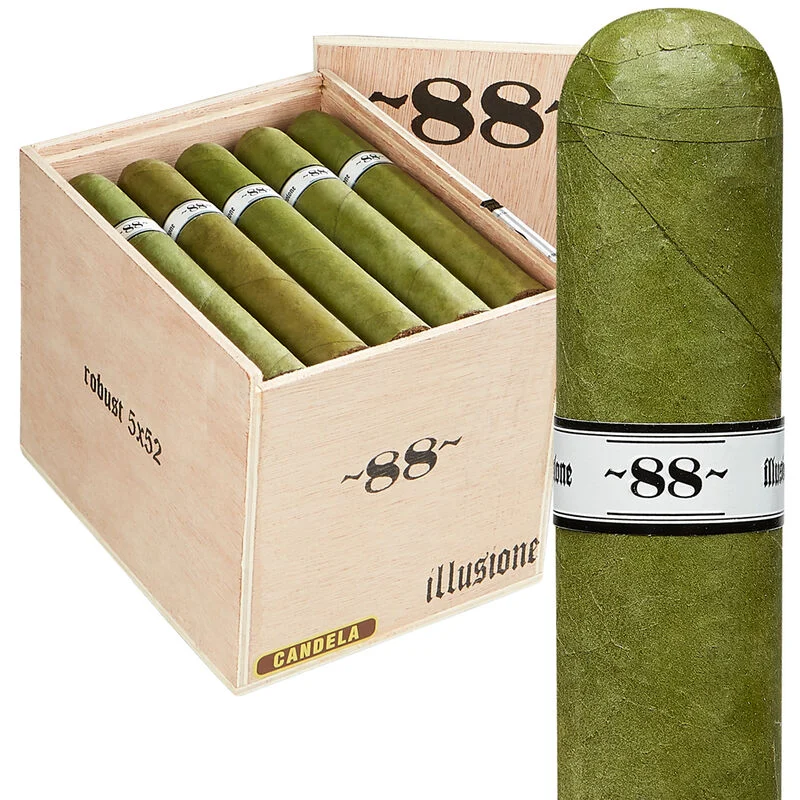
Illusione “88” Candela
The standard-bearer of the green revival. A Nicaraguan robusto (5″ × 52) built on Aganorsa leaf with a flawless triple cap — reviewers have scored it in the low-90s, and it earned every point: grassy, floral, creamy, and far more complex than a green cigar is supposed to be. If you smoke exactly one candela this decade, make it this one.
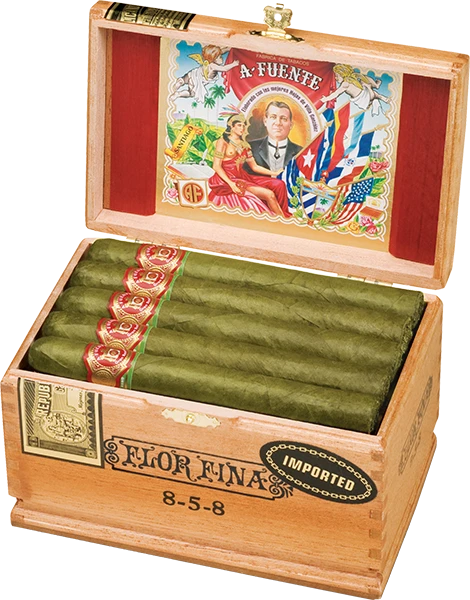
Arturo Fuente Flor Fina 8-5-8 Candela
The Fuente family never really stopped, which tells you something. The 8-5-8 in candela (6″ × 47) is the last living connection to the Green Century — a direct descendant of the cigars that filled American humidors when Ike was in office. Smooth, creamy, mild-to-medium, and honest about it. Smoking one is basically time travel with a price tag under $10.
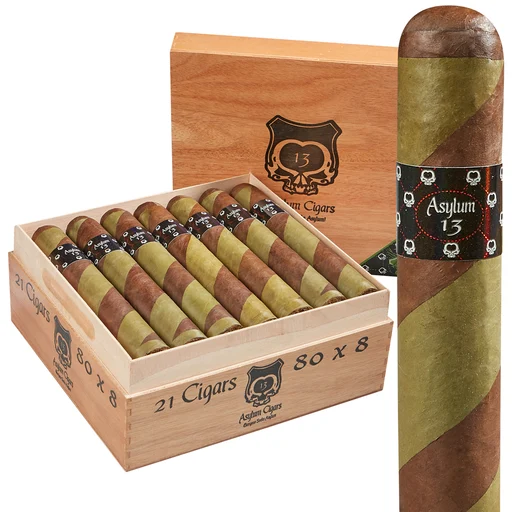
Asylum 13 Ogre
The candela for people who think mild is a character flaw. Asylum takes its full-throttle Nicaraguan blend — the one that normally comes wrapped in aggression — and finishes it in a silky green leaf. The result is the rare candela that punches back: earth and pepper under the grass. It’s also the best name-to-product match in the industry. It’s an ogre. It’s green. What did you expect?
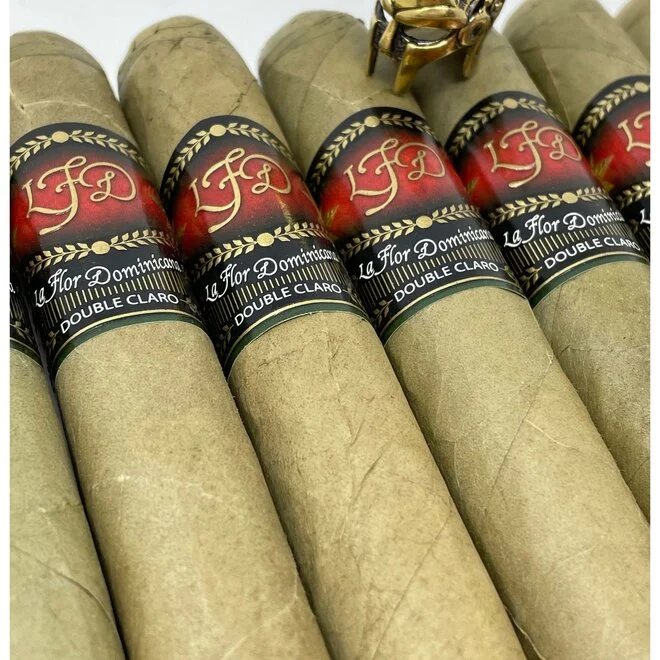
La Flor Dominicana Double Claro
LFD built its reputation on some of the strongest, most pepper-forward cigars on the market — and then it made a candela anyway, which is exactly the kind of thing a confident blender does. It comes up fuller-bodied than the green average, with nutty, creamy notes and a cedar spine. Proof that “candela” and “serious” belong in the same sentence.
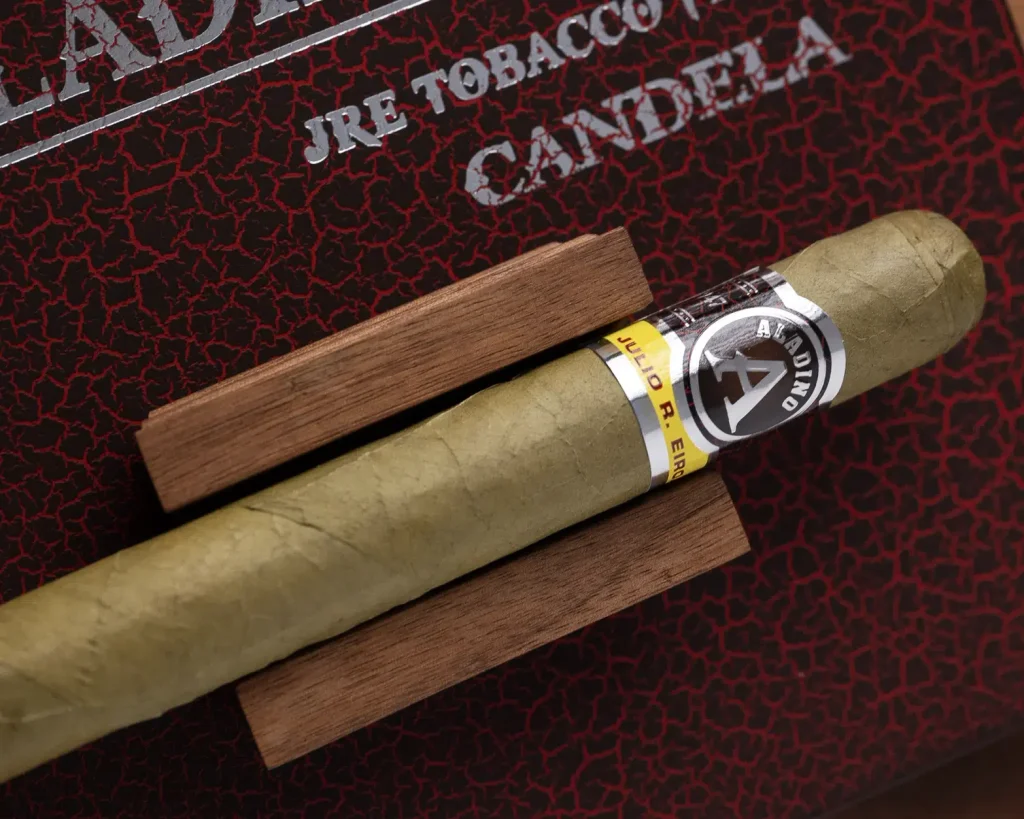
JRE Aladino Candela
From the Eiroa family’s farm operations in the Jamastran Valley of Honduras — a Corojo candela wrapper grown on the same red soil as their celebrated darker lines. Farm-to-table, if the table is a humidor. Bright, herbal, and distinctly Honduran in a way most candelas aren’t, since most green wrappers lean Nicaraguan. The connoisseur’s green cigar.
The Verdict
The candela’s story is really a story about how cigars get their reputations: not from the leaf, but from the marketing around it. The wrapper that defined American smoking for half a century became a punchline the moment the culture decided brown meant serious. The current revival isn’t nostalgia — it’s a correction. So grab a green one, put your preconceptions in the ashtray, and taste a hundred years of American cigar history. Worst case, you have a great conversation piece. Best case, you discover that green was never the problem.
Header image: Cigar wrapper color chart by UpstreamBitstream, via Wikimedia Commons (CC BY-SA 3.0).