You spent real money on cigars. Then, with total confidence, you put them somewhere terrible. A kitchen drawer. The fridge. The glovebox of a car that is currently 141°F inside. No judgment — fine, some judgment — because nearly everyone does it once. Here’s how to store cigars so they smoke the way the blender intended: slow, cool, and worth the money.
The Two Numbers That Matter
Cigars are kept comfortable between 65–72% relative humidity, with the sweet spot at 68–70%, and a temperature around 70°F. The old shop wisdom was “70/70,” and it’s held up pretty well — though the modern consensus leans slightly drier, around 65–68%, which burns cleaner and fights mold. If you remember nothing else from this article, remember the humidity range. Cigars outside it are on a clock.
Too dry (below about 60%) and the wrapper cracks, the draw tightens up, and the smoke turns harsh and bitter — a dried-out cigar tastes like an apology. Too wet (above about 72%) and you get a spongy stick that won’t stay lit, burns unevenly, and can sprout mold. A wet cigar doesn’t burn; it argues.
Get Yourself a Humidor
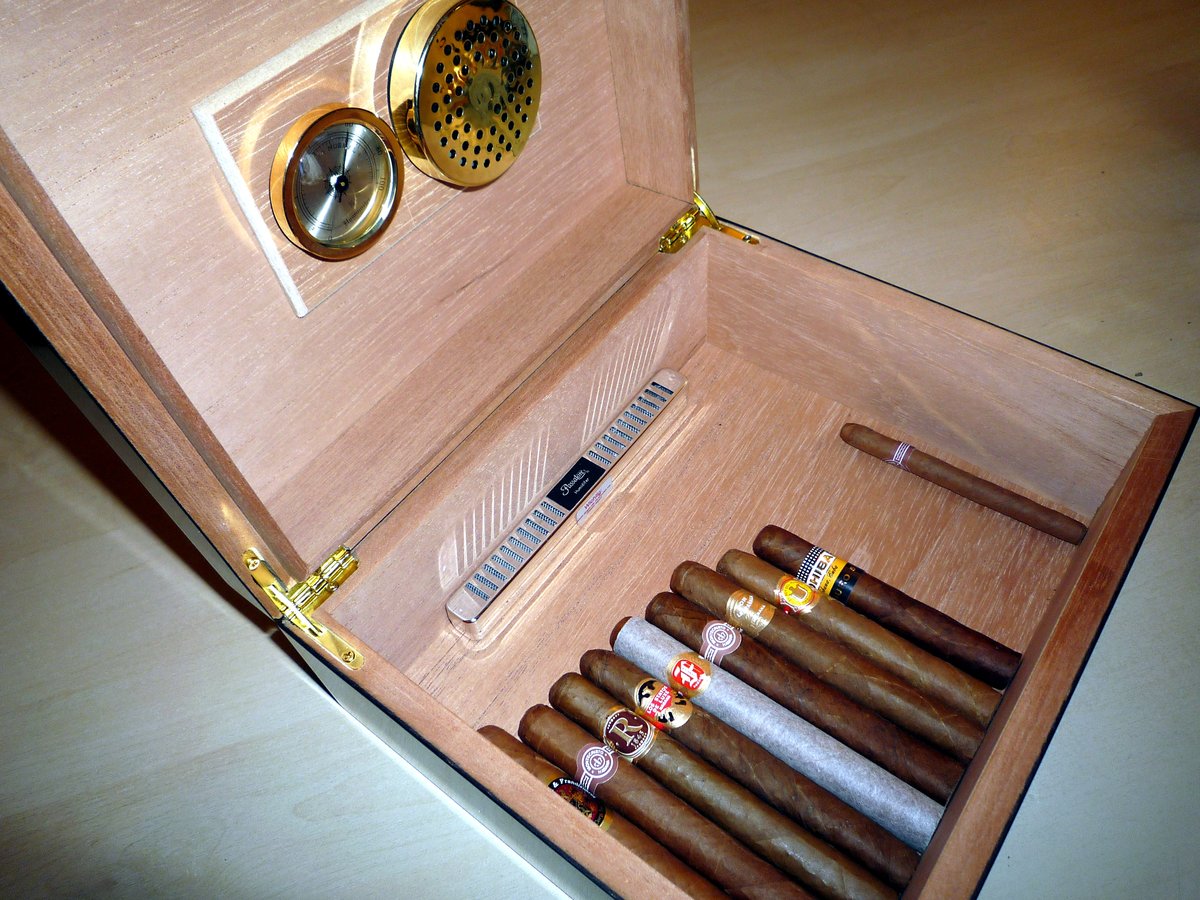
A humidor is nothing mystical: a sealed box, lined with Spanish cedar, that holds humidity. The cedar is doing real work — it buffers moisture, smells faintly of the promised land, and gives cigars a safe place to age. A basic 25–50 count desktop model costs less than a five-pack of anything worth smoking twice.
One thing almost everyone gets wrong: a new humidor is not ready on day one. The cedar is bone-dry from the factory and will pull moisture out of your cigars for a week if you let it. Season it first — charge the humidifier with distilled water (never tap water; minerals and tap-water mold spores are how humidors die young) or drop in a couple of 69% two-way humidity packs, close it, and leave it alone for 24–48 hours. Then load it.
We catadorically (get it?) recommend purchasing a self-regulating humidor. Keep it stocked with distilled water or cigar juice, and it does all the work. You can generally find a decent one in the $200-$250 range. Check out Amazon and Walmart for a few examples — they’re gonna be much cheaper than specialty cigar websites.
No Humidor Yet? Improvise Properly
The famous tupperdor — a Tupperware container, a humidity pack, and optionally some cedar sheets — works brilliantly and nobody at the shop is allowed to judge you for it. A clean cooler does the same job for full boxes. Even a zip-top bag with a 65% pack inside will hold cigars for weeks without drama. The only iron rule: whatever holds the humidity never touches the cigars directly. Damp anything against a wrapper is how you get spots, swelling, and mold.
Two-way humidity packs (Boveda is the big name) are the single greatest cheat code in cigar storage: they absorb and release moisture to hold a fixed RH, no filling, no guessing. Toss them in, replace them when they go stiff, and you’ve basically automated the hobby.
The Fridge Is a Cigar-Killing Machine
It’s cold, so it must be good for cigars, right? No. A refrigerator is cold and dry — the exact opposite of the plan. It pumps moisture out of wrappers until they crack, and cigars, being essentially sponges with good taste, will happily absorb every odor in there. Nobody wants an onion-marinated Cohiba. The freezer is even worse: rapid cold cracks wrappers, and a thawing cigar weeps.
While we’re at it, the other places cigars go to die: sunny windowsills, radiators, bathroom shelves (humidity swings), and car gloveboxes. If a spot would be uncomfortable for a puppy, it’s fatal for tobacco. The quiet killer, though, is neglect — check on your stock once a month, top off or swap the packs, and you’ll never have a bad surprise.
How Long Do Cigars Keep?
Stored properly, cigars keep essentially indefinitely — and many improve. Six months to a couple of years of age smooths out young pepper and lets the blend settle. The one villain here is heat: sustained temperatures above about 75°F wake up tobacco beetle eggs, and a beetle outbreak is exactly as much fun as it sounds. Keep it under 75 and the beetles stay science fiction.
Swung the other way and cigars got spongy? Dry-box them: leave one out (in the humidor’s lid area or a drawer, not the counter overnight) for a few hours to a day before smoking. It firms the wrapper back up and the burn follows.
The Bottom Line
The checklist is short: 65–70% humidity, around 70°F, cedar nearby, packs doing the work, a monthly check-in. Store them right and they’ll wait years for you. Store them wrong and by spring you’re the proud owner of very expensive mulch. New to the vocabulary? The full glossary is here.