Every review site eventually has to check its own receipts, and last time we did, the White Owl Ranger got a fair shake for being exactly what it claims to be. The Avanti Licorice is what happens when a cigar with a far more impressive résumé tries the same trick with a candy coating. This is a brand whose family tree includes Parodi, De Nobili, and a genuine Italian-American tobacco dynasty — a company that spent a century perfecting fire-cured Kentucky leaf and, in 1970, decided the finished product was missing something. What it was missing, apparently, was licorice. It was not. Here is our honest finding: this is a terrible cigar.
The Contender
As a piece of history, the Licorice comes from the best address in American machine-made tobacco. The story starts in 1901, when Dominic Anthony and Frank Suraci left Calabria for New York carrying a nostalgia for the small, dark TOSCANO-style cigars of home. By 1925 they owned the Parodi factory in Jersey City; after the 1929 crash, they landed in Scranton, Pennsylvania, where the company spent the next nine decades as the undisputed king of Italian-style cigars — swallowing De Nobili after World War II, Petri in 1963, and at its peak controlling some 75% of the entire Italian-style market. In 1970 they launched the anisette-tipped Avanti as the new flagship, and the Parodi Cigar Group renamed itself after it. In 2015, the company was acquired by Manifatture Sigaro Toscano — the Italian house behind the very TOSCANO cigar that inspired the founders — and in August 2022, the Dunmore, Pennsylvania factory closed its doors after 90 years, with production moving to the Dominican Republic. That is a magnificent story. It belongs on a plaque, not in this cigar.
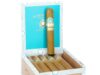
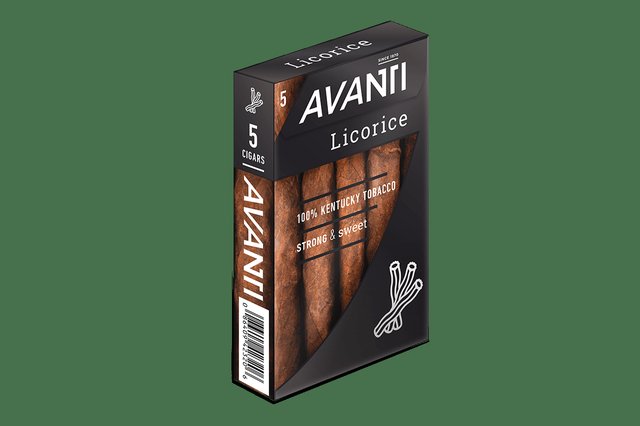
The Licorice itself is a 4½ x 34 machine-made cigarillo built from Kentucky fire-cured tobacco — leaf smoked over hickory, aged four months, and fired into that dry, no-humidor-needed format that made the house famous. Individually cello-wrapped, sold in five-packs for about $8 (roughly $1.60 a stick) or boxes of 50 in the high $50s. The specs, on paper, are the same ones that make the unflavored Parodi a genuinely great cheap smoke. The difference is the flavoring, which is the entire review, really.
The Look & the Cold Draw
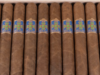
Out of the cello, it’s dark, dry, and firm. It’s closer to a breadstick than a premium leaf, which is the format working as intended. The nose is where the first warnings arrive: black jelly bean and hickory smoke, in roughly equal measure. It smells like a campfire that shops at a candy store. A version of this could work — anise and dark tobacco is a real Italian pairing — and the cold draw holds out that hope for one more minute.
The Smoke
No thirds here; at 34 ring gauge, this review has about twenty minutes of runway. It lights instantly, like all good machine-mades, and the opening puffs are almost charming: sweet anise over smoky mesquite, an Italian newsstand in miniature. Then the act ages out. The licorice flavoring — which lives in the wrapper, not the filler — turns from candy to cough syrup as the cigar heats, while the fire-cured leaf underneath refuses to play along and reads as barbecue ash and pencil shavings. Fire-cured Kentucky is low-sugar, high-nicotine tobacco: the smoke arrives medium-full with a nicotine slap entirely disproportionate to a cigar you can hold like a pencil. By the halfway point, the licorice has quit the job and left the hickory to run the register alone, and the last third is bitter, hot, and mercifully brief. The only Avanti Licorice we enjoyed was the one that had gone out.
Strength & Pairings
Stronger than it has any right to be — a 34-ring IED. The company’s own pairing suggestions are chocolate stout and dark chocolate, which is their way of saying the flavor needs adult supervision. We’d go further: espresso, fernet, or a glass of water and a moment of reflection all outperform it. If you’re determined to pair licorice with smoke, skip the middleman and have a sambuca next to an unflavored Parodi.
The Verdict
Here is the tragedy: there is a good cigar inside this company, and it’s called Parodi — the same fire-cured leaf, the same century of craft, no costume. The Licorice is that cigar wearing a novelty T-shirt to its own funeral. Our scale has a band below Fair for cigars like this, and it exists for a reason: at $1.60, cheap isn’t the same as value. A fair price for a bad twenty minutes is still a bad twenty minutes. If you love the genre, buy the Parodi. If you love licorice, buy the jelly beans. The only thing combining them improves is nothing.
Score: 59/100 — Pass | Value Grade: D
Flavor & Complexity: 19/45 · Burn & Combustion: 16/25 · Construction & Draw: 15/20 · Consistency: 9/10
The Value Grade: a D at $1.60 is not about the money. It’s about the twenty minutes. The Value Grade rewards cigars that over-deliver; the Licorice under-delivers on a name that should have carried it.
EDITOR’S NOTE: My father absolutely adored these cigars and took great pleasure in chewing the end while he smoked it. They were banned from my humidor because they seemed to “pollute” the other cigars with their intense, totally artificial flavor.
Header image: official Avanti Cigar Company product photo, fair use (17 U.S.C. § 107) for review and criticism.