Every review site eventually owes history a favor, and today catador.us pays up. There are cigars you review because they’re new, cigars you review because they’re expensive, and cigars you review because George Burns smoked ten to fifteen of them a day for roughly eighty years and lived to 100 — as if to personally file an appeal against every warning label ever printed. The El Producto Queen, “my little lady” in Burns’s stage vocabulary, is that third kind. When Milton Berle and the Hillcrest Country Club crowd pushed Havanas on him, Burns waved them off and lit his own: the Queens never went out on stage, and that was that. So we did the only responsible thing and gave the old girl the full treatment.
The Contender
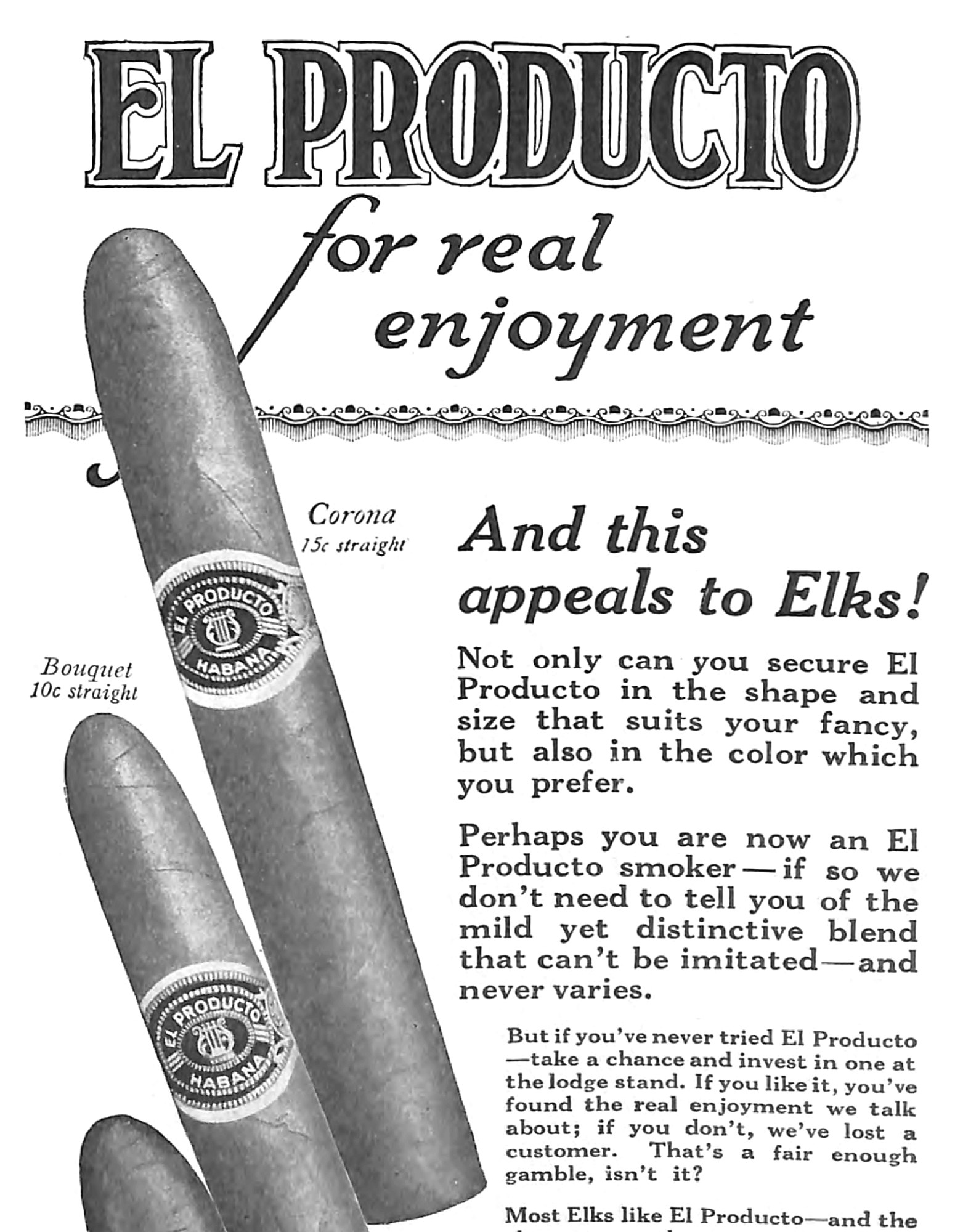
El Producto wears one of the oldest success stories in American tobacco. In 1905 a Russian immigrant named Sam Grabosky — a Philadelphia tobacco broker who had arrived fifteen years earlier with, reportedly, all thumbs — bought a defunct cigar label, boxes, and bands for eleven dollars, and relaunched it as the flagship of his G.H.P. Cigar Co. The blend: Cuban and Puerto Rican filler, Connecticut broadleaf binder, shade-grown wrapper, rolled by hand. The brand’s entire identity was the promise printed in its own advertisements — a mild, nutty blend “that can’t be imitated — and never varies.” It varied neither: by World War I there were 36 G.H.P. factories across three states, and by mid-century the line was a national phenomenon, with fans ranging from vaudeville royalty to a young Elvis Presley, who was wild about the Altas and Diamond Tips.
Consolidated Cigar absorbed G.H.P. in 1926, and the familiar slide followed: machine-making, homogenized sheet wrapper, additives — El Producto became, in one executive’s own words, the company’s “poor stepchild.” But the Queens kept their all-natural wrapper and filler, each perfecto sealed in an airtight glass tube, which is why they stayed moist on drugstore shelves for decades and why Burns’s monthly shipment of 300 arrived in Beverly Hills with him grinning “ear to ear.” Consolidated’s heirs at Altadis hold the brand today. Finding a tin is no longer shopping; it’s archaeology. A couple of dollars a tube, if you’re lucky.
First Third
The glass tube opens with a faint pop of preserved freshness — the single best packaging idea in the history of inexpensive cigars. The cold draw is mild and faintly sweet, with a nutty background hum that the old ads promised would never vary. It doesn’t. The perfecto tip takes a small nip, the light is instant — Burns’s stage requirement was, it turns out, a quality-control spec — and the first third delivers soft cedar, sweet hay, and a low, toasty nuttiness that reads less like a flavor and more like a signature. The body is genuinely mild, the smoke cool.
Second Third
Here is the thing about the Queen’s second third, and it was true in 1955 and it’s true now: it is the first third, again, on purpose. Gentle toast, that nut core, a whisper of dry wood. There is no arc, no third-act payoff — and to call that a flaw is to miss the whole point of the brand. “Never varies” was not a limitation; it was the product. Push it hard and it forgives; neglect it mid-conversation and it’s still burning when you get back, which is precisely the trait a comedian needed between punchlines.
Final Third
The perfecto taper does what perfecto tapers do: the draw firms up, the smoke concentrates, and the toasty nut note warms without ever biting. No ammonia, no bitter finale — the glass tube earning its keep one last time. The Queen ends the way it spent its whole life: mild, composed, and exactly what it said it would be.
Construction and Burn
Machines are relentless quality control, and the Queen was machine-precise where it counts: a dead-even burn, respectable grey ash, and a draw with just enough resistance. The tube means construction effectively can’t fail before the match — no dried-out wrappers, no cracked heads. The perfecto shape asks one thing of you (cut the tip cleanly) and repays you with a cigar that has no weak spot along its entire body. Burns smoked them by the hundred per month; that’s the durability test, run continuously, for seventy years.
The Verdict
Judged against the premiums we usually cover, the Queen is a museum piece: mild, sweet-nutty, one-note, and proud of it. Judged as what it actually is — the last artifact of a brand that once ran 36 factories and kept the funniest man of the 20th century loyal for eight decades — it’s the most romantic couple of dollars in tobacco. Burns outlived everyone who told him to smoke something better, and so did the Queen. You can still, if you hunt, buy what he smoked. That’s the whole review.
Score: 70/100 — Fair | Value Grade: C+
Flavor & Complexity: 23/45 · Burn & Combustion: 22/25 · Construction & Draw: 17/20 · Consistency: 8/10
The Value Grade: the Queen is as cheap as ever, but value isn’t just cheapness — it’s what you get against what you pay and how hard you had to look. Scarcity costs you something too. That’s the difference between a C+ here and the White Owl Ranger’s B: the Ranger is everywhere, and the Queen is a treasure hunt.
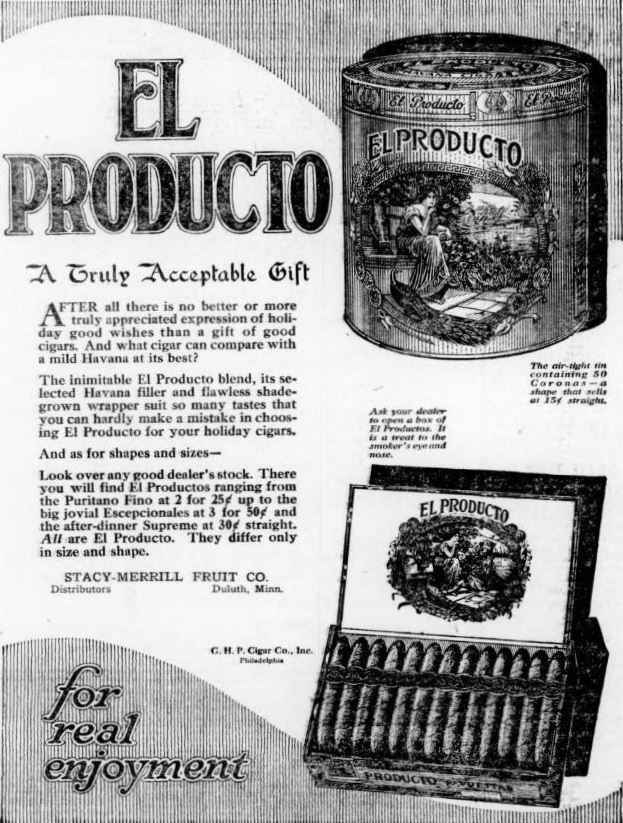
Image: El Producto advertisement (1920, The Duluth Herald), Wikimedia Commons, public domain.